Snowcrest
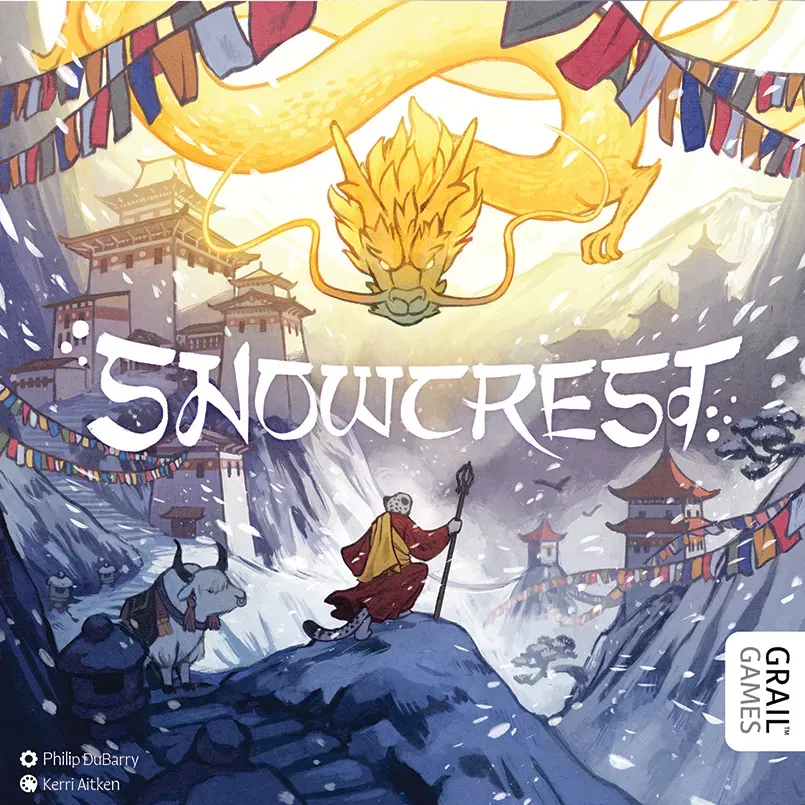
There's something to be said for a well composed cover for a board game. Quite a few games have drawn me in simply from the cover alone, and that's very much the case with Snowcrest as well. This is a tablaue building game where you're gathering villagers and using their abilities for actions with the goal of collecting scrolls, which are both points as well as the end game trigger.
When The Dice Tower was covering this project on Crowdsurfing, back in May 2024, there was praise for how interesting the game looked as well as the art, especially for the value. Another factor was the snowy mountain theme – a part of me was hoping it would appeal to my husband, even though the anthropomorphized characters don't interest him in the slightest. So in many ways, I kind of went in a little blind to this project.
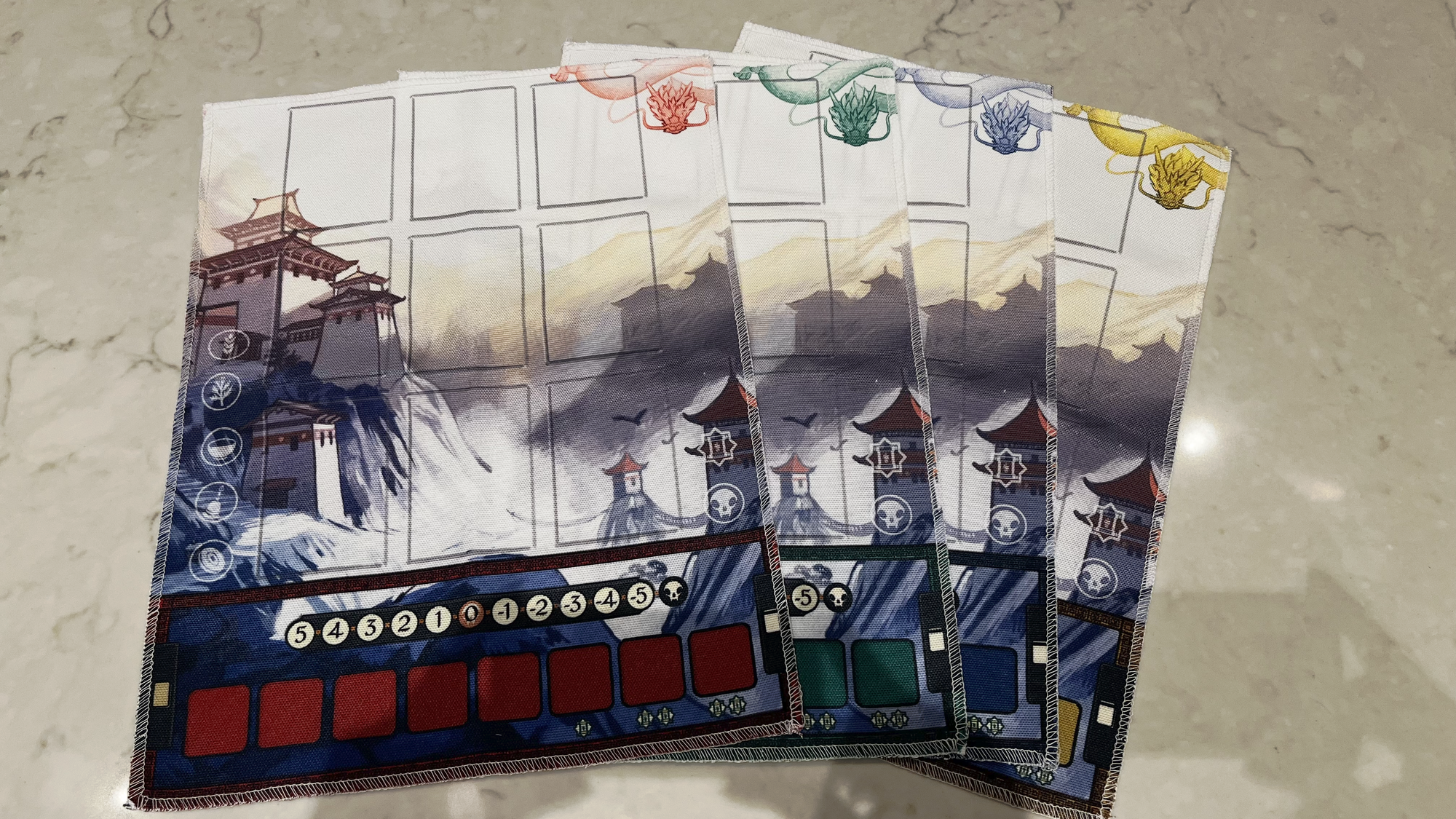
Thankfully, it turned out alright! For one, can certainly give praise to the production. The cloth mats for the central area and player areas are a really nice touch and beautifully colored, they are very similar to say the mat in Mandala. The wooden tokens in the upgraded version are very nice with clean printing on them.
It's been stated, but the art really gives a cozy vibe to it, simple in some ways but certainly detailed enough where it matters. And it's surprising how it all fits in a small compact box, think Calico size.
Gameplay
A turn in the game is very simple, just taking one of three main actions:
- Activating a Villager card in your village for its action.
- Adding a Villager to your village, and then activating it immediately.
- Resting, getting resources from Villagers, resetting your buildings, and then flipping all your Villagers face up.
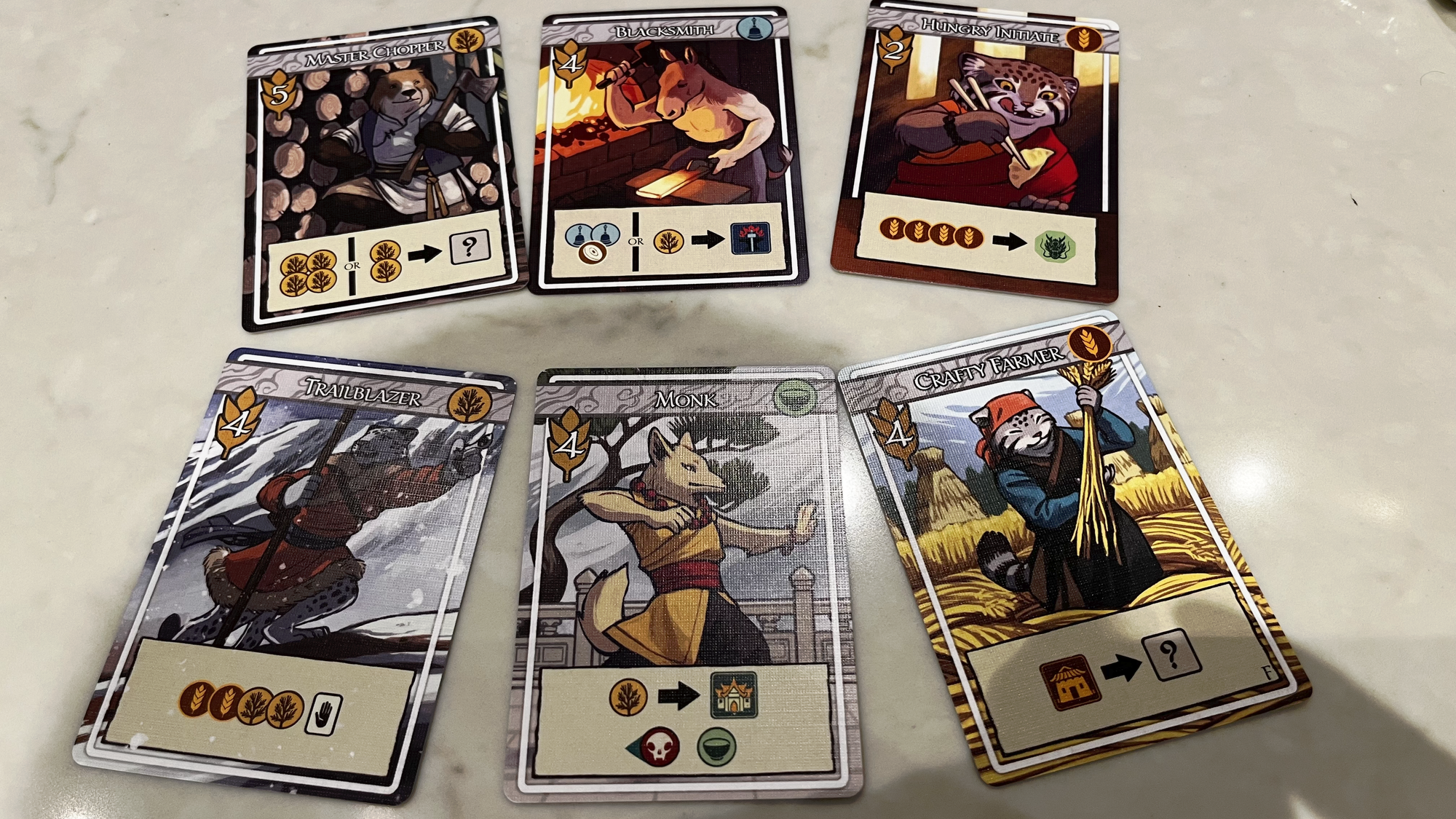
Players have their own deck of cards of the same villagers, they'll start with 4 starter ones in the corners of their 3 by 3 grid and then from the remaining cards they'll buy their first villager and put it in the center. This adds some variable setup for every game. At first I thought it would be a deck builder, but common villagers that you replace get discarded back to the bottom of the main deck. The game effectively ensures you have certain villagers/abilities that are possible to have available to you as a baseline, probably to try and prevent players from trapping themselves.
The nice thing is that cards have multiple uses. If they're in hand or face up you can use them as resources for costs based on the icons in the upper right. And when you take a Rest action you gain the resources that are visible on all cards. There's push and pull between using cards for actions or resources.
Another decision factor is the order of operations for using your cards, because when you have 3 face down villager cards in a row, column or diagonal you're forced to take a rest action. Adjacency and placement really makes a factor, especially when you're replacing villagers and activating them immediately as you'll have to consider their ability for future turns too.
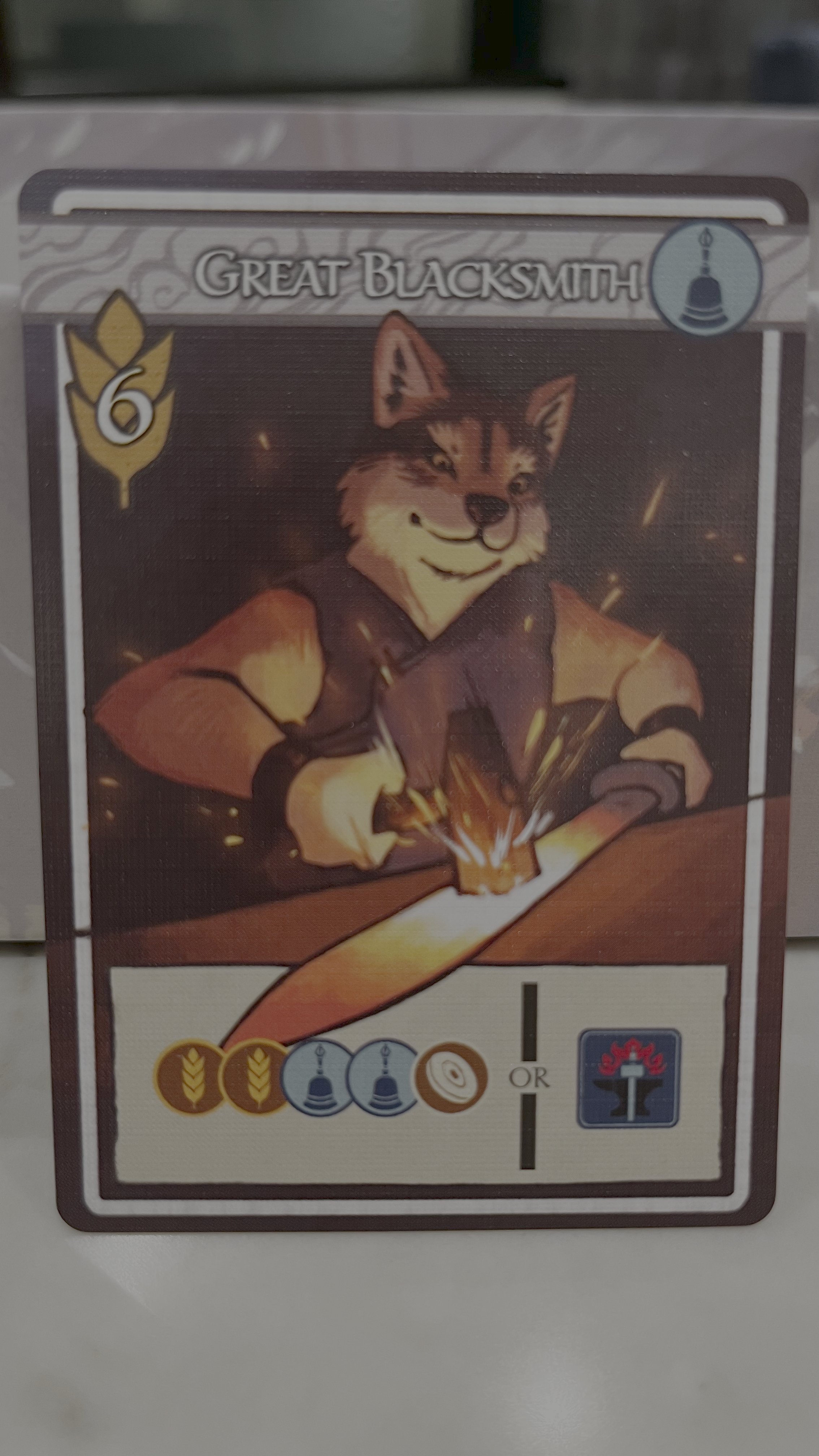
The one down side to the common Villager deck is that there very much is opportunity cost based on what gets revealed from the deck. Just getting the "Master Farmer" card which gives 2 farm buildings on every activation sets you up to be able to buy stuff easily. Pair that with cards that let you refresh your buildings and instantly you're in a position to take Villagers at a whim.
What progresses the game is getting scrolls and while there's different ways to get them, such as the race mechanic with Achievement cards, the two "interactive" ones are through the Forest and Guardian cards. These act as sort of a randomized payment method for all players but rewards are only given to the player that triggered it. Since acquiring these cards are typically an intentful action, they push the game towards an end.
Due to the cost nature it keeps players wanting to balance between having resources available to spend as well as dealing with the unexpected costs that other players incur. I can see people not liking the always negative aspect of this, having to pay at random times outside of your own turn can feel punishing. Almost like drawing and Epidemic card from Pandemic except in this case its another player making it happen in order to gain points.
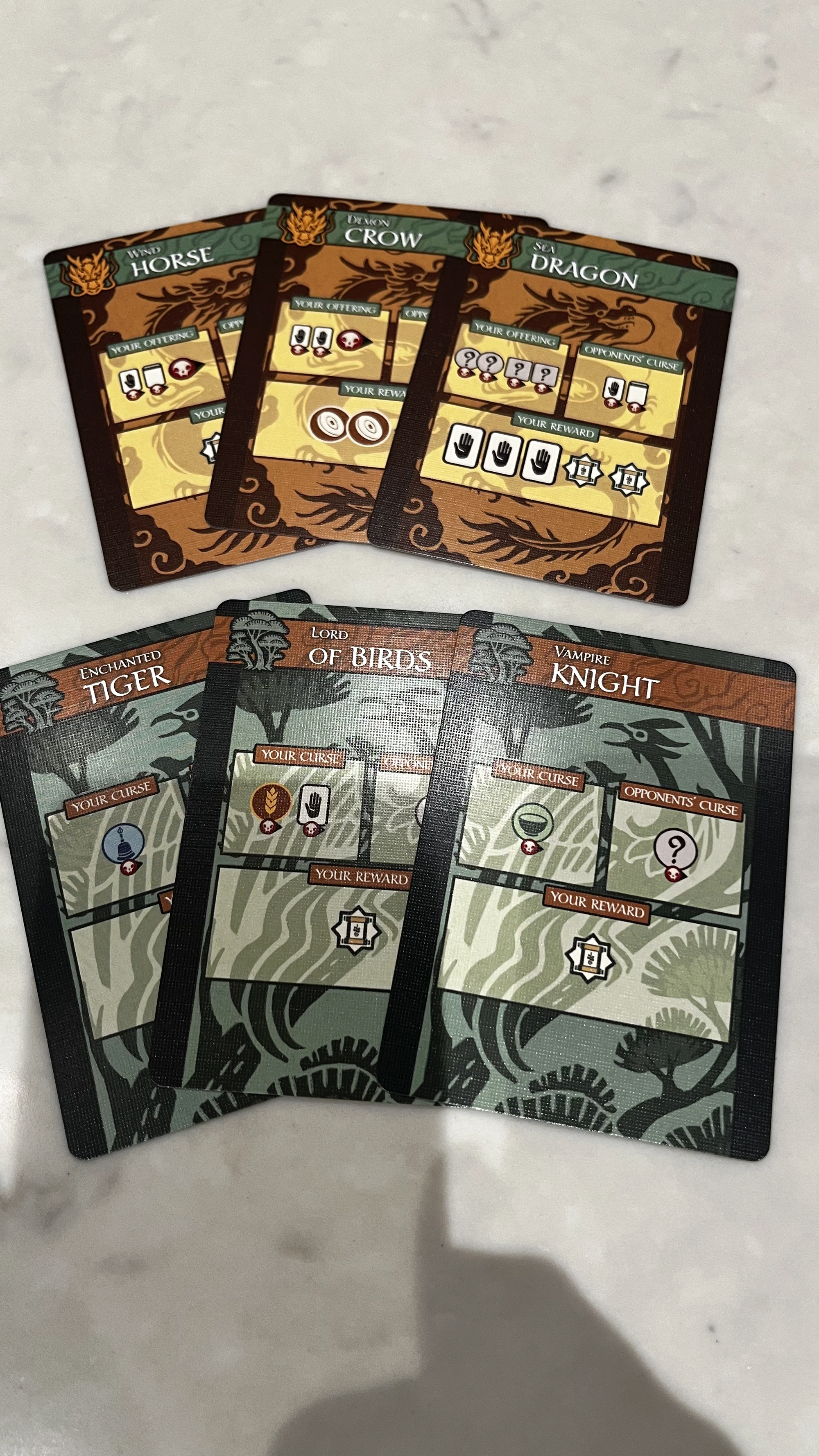
I did notice that there are some Take-That cards with the Thief villager archetypes, not fully sure how I feel about it as I'm not a huge fan of take that. I suppose it makes sense for the lighter game that it is, but it does feel odd that a player could acquire them and use them a few times repeatedly while other players may never get access to a villager with similar ability. Apparently these only come from the Frost mini expansion, but I guess I'd have liked to see more unique abilites than just Take That.
Thoughts on Solo
While certainly playable for solo, I do feel that for solo play you're forced to rotate your villagers out often from the available common villagers in order to get fresh cards and typically to fish for specific actions. With such a large card deck (at least for solo) it can be hard to get a certain action within the limited turns you can take. Still, its an enjoyable puzzle and quick to play your turns. For solo, you can feel like you can combo off a bit while staving off the forced Rest action.
The hardest part of this first play was trying to keep my Omen track positive before triggering game end. It was very luck of the draw to manage getting the "Great Monk" card and managing to get out of the negative points for Omens that happened earlier in the game.
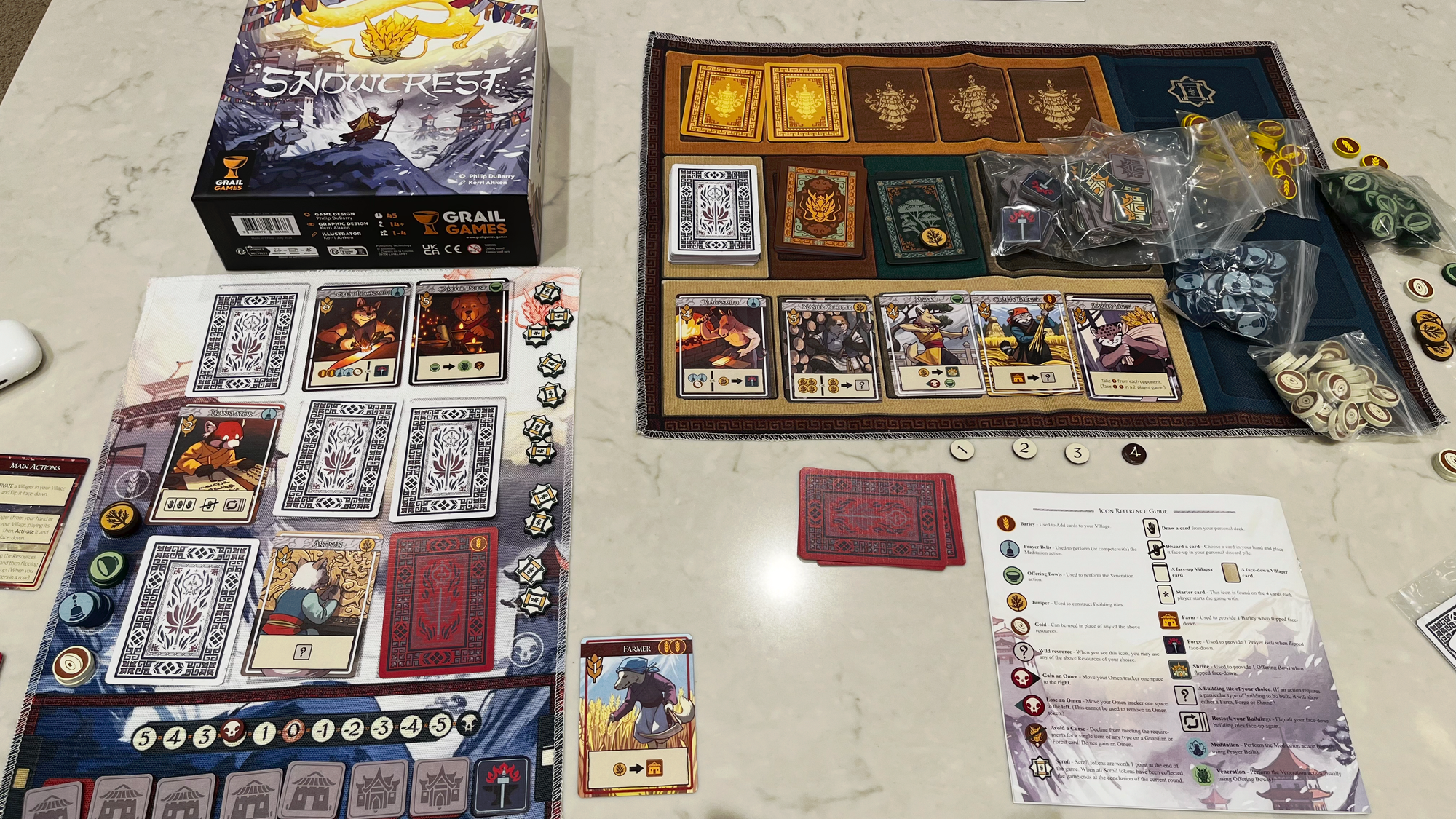
Overall, I'm still happy with the game. While I prefer my games to have more positive interactions, the card system is enjoyable. In some ways it reminds me of the card activation system of Monumental, everyone has a puzzly tablaeu of cards that they're trying to manage and figure out the order of activation. It's easy to pick up and play and I can't wait to share and teach this one.


Member discussion