Kinfire Council
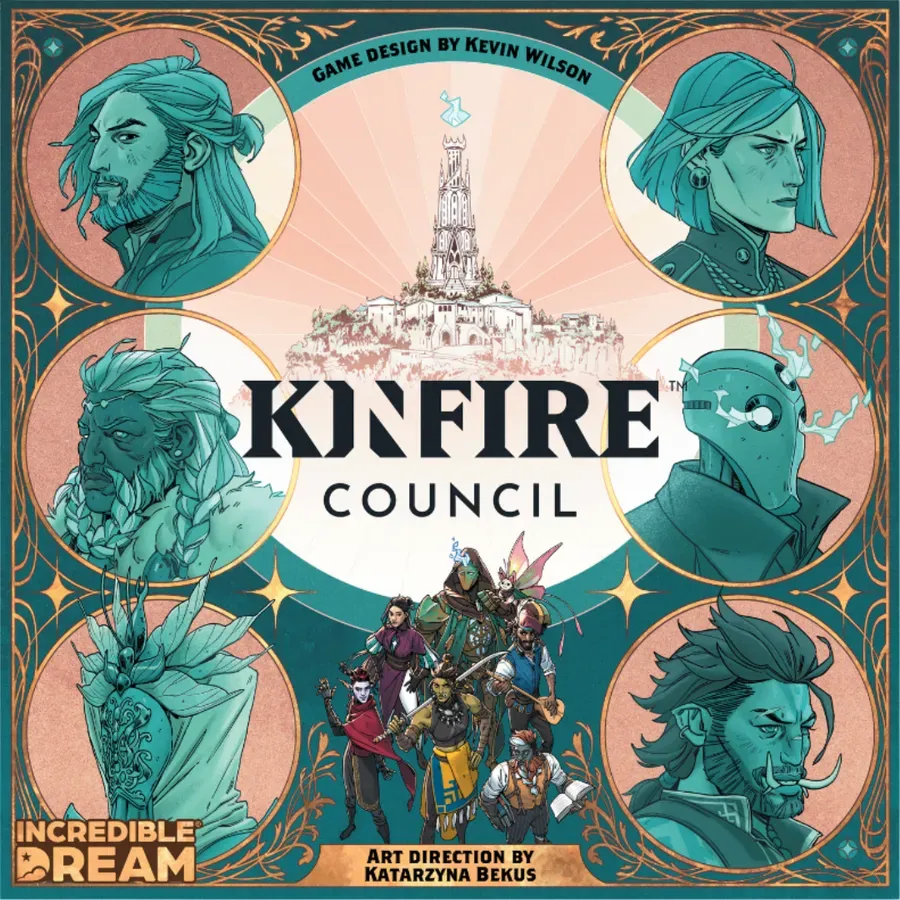
I feel like Incredible Dream studios has made a really interesting fantasy setting with their world of Din'Lux, where magical kinfire lanterns help keep the Starless Nights at bay, which was introduced in their first game Kinfire Chronicles: Night's Fall. It's gotten good reviews and I have tried to do a campaign with friends but I will probably have to just play it solo at some point as I do want to continue it.
So when the publisher announced they were making a worker placement Euro game set in the same universe, I was very much onboard for it. Kinfire Council is thematically designed as an entry after the events in Kinfire Chronicles, however you don't need to have played the previous game to enjoy what is offered here. I'm sure more of the characters and location names would be more familiar to those that have played the campaign and explored the world of Din'Lux already. What's really interesting is the blend of what should be perhaps too much mechanics but I feel it all makes thematic sense.
In Kinfire Council, you area member of the Council and are trying to rebuild the great city of Din'Lux, by defending it from cultists, upgrading buildings, voting on policies and building the protective Lighthouses for other neighboring towns. This all sounds like a lot, and the upfront teach is a bit of a bear, but it all comes together as you start to play. Basically there are cultists that will block worker placement spots on the main city area. Cultists also add or progress threats that will affect all players if/when they're triggered, so it adds a touch of semi-cooperativeness to it. Players will take turns placing out workers to gather resources, take actions, or capture cultists. And at the end of a round the policy with the highest vote will be enacted, either having an immediate effect, possibly giving a permant power or can add a new rule that will stay for the rest of the game.
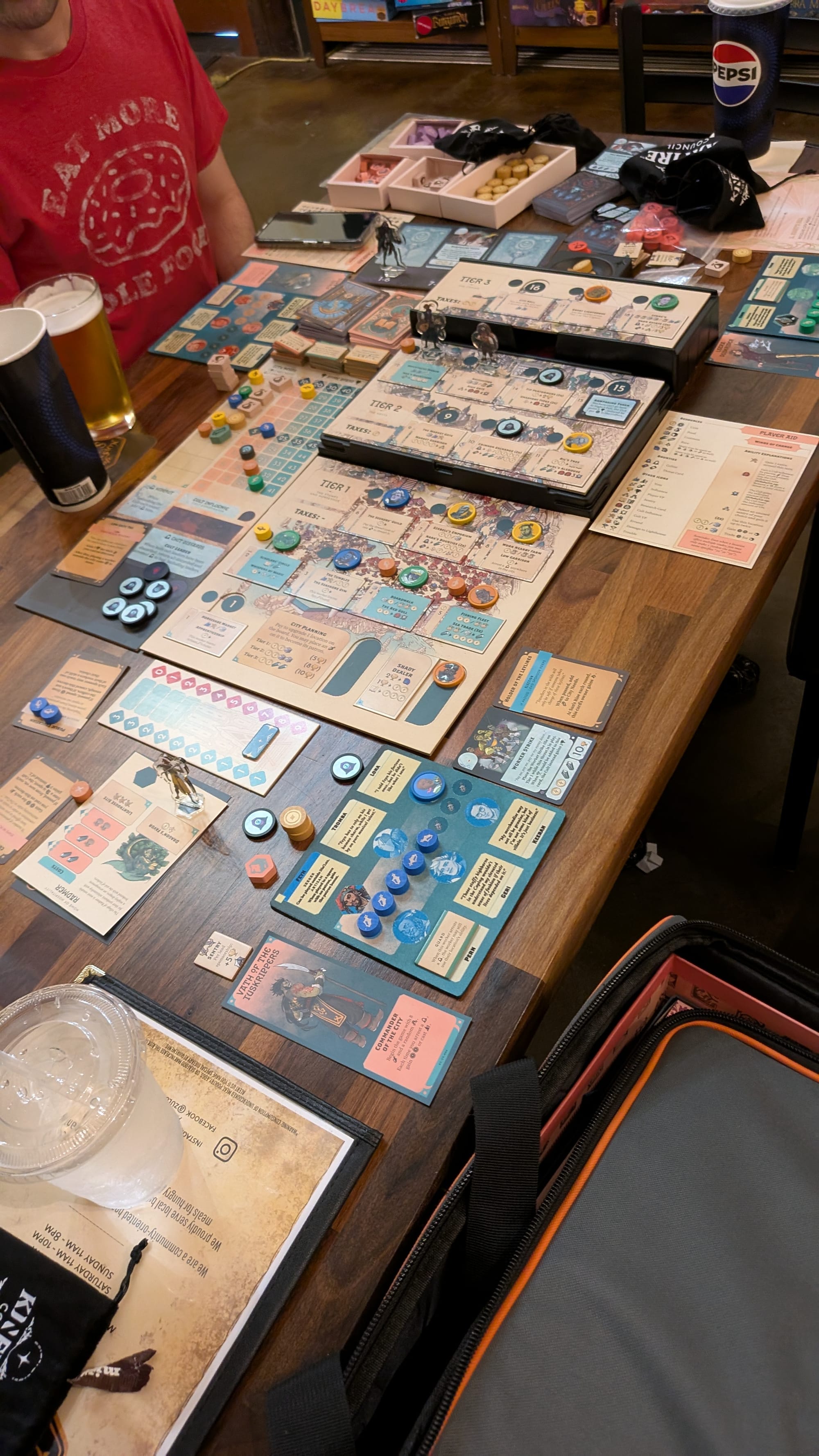
The production here is stellar, everyone has a special Seeker worker who can go to spaces outside the city, and these are acrylic standees with beautiful art. The cultists are nice weighted chip tokens that you draw from a bag. There's an element of extra presentation with how you can separate the tiers of the city using the inserts that come with the game. With clean iconography and streamlined resouces that have an intuitive hierarchical value to them.
With the expansion Winds of Change, you can also play the game fully cooperatively and solo, and it even adds a really interesting legacy-style aspect where players can completely change worker placement spots that will stay from game to game. I think these aspects make the expansion a must have.
One thing to note is that because the Cult is always in play regardless of mode, there is a built-in sort of "traitor" like mechanism where players could align with the cult if they put effort into adding influence with them. While interesting on the surface, I've yet to see that happen. And because I see this game being played more for co-op and solo, I probably won't. While I don't mind the inclusion of this aspect in the game, I'll say it doesn't really appeal to my kind of play style, which is why I don't really own games with traitor mechanics like Betrayal at the House on the Hill.
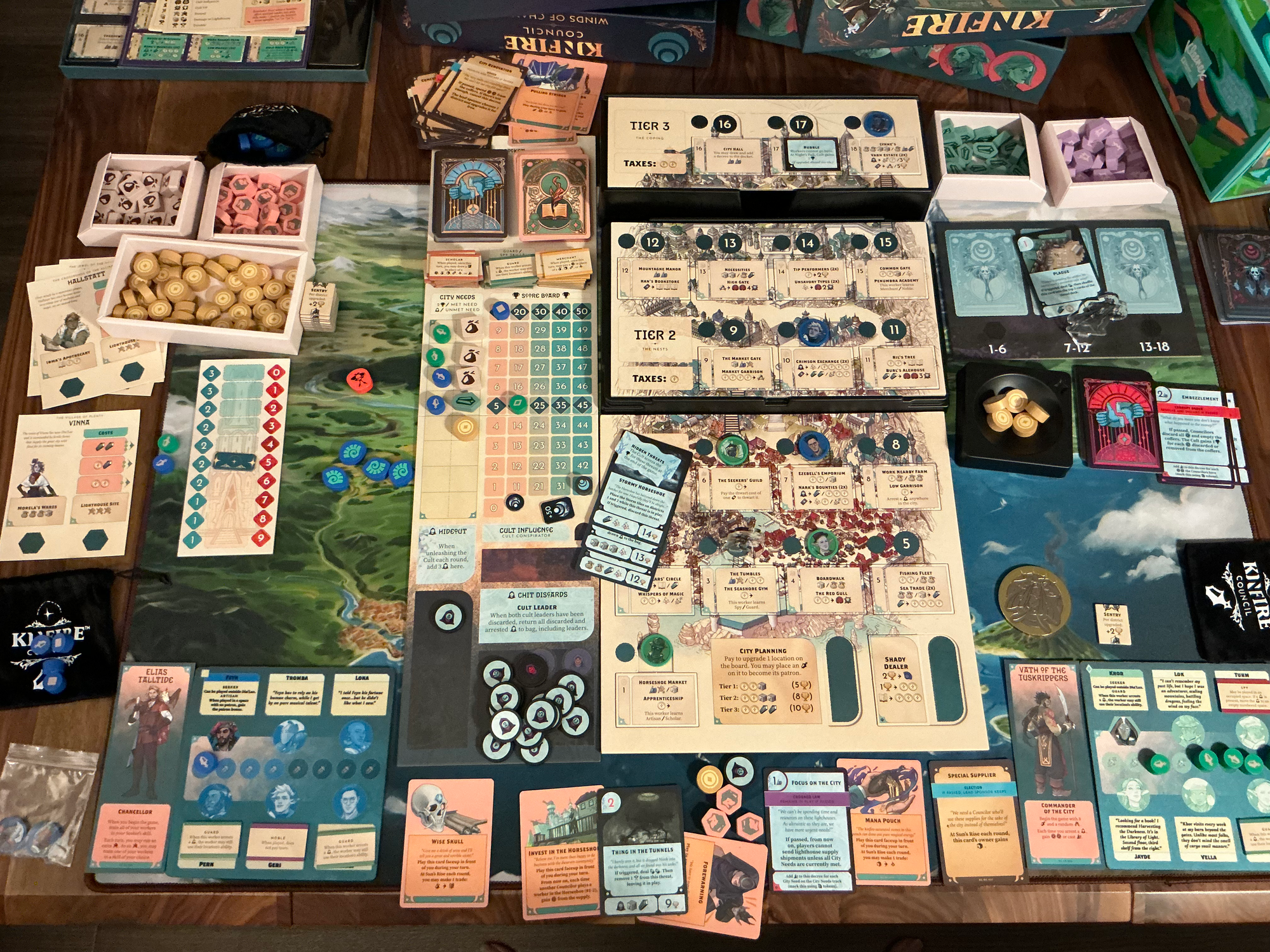
For solo, it works very well, you do an adjusted version of playing two handed witht the benefit of having one resource pool shared between them. The one thing that felt odd is the hidden threats aspect. It seems kind of crazy that the cult can just jump so high out of nowhere. In my first solo playthrough, not only did they have a 5 vote card that gave them 20 points but they also got 39 points when their hidden threats.
Since it's impossible to manipulate or mitigate these hidden threats, I don't think it feels good that you could play an entire game that was nearly impossible to win and you just had no idea that it was like that till the end. Especially when its just luck of the shuffle and there are super high point values for threat cards, we're talking 20 whole points on multiple cards. I feel like the hidden threats need some kind of house rule to temper the wildly swingy nature.
Still, the game itself is wholly enjoyable and I would definitely want to keep this one around. If anything, it almost pushes the first game up in priority to see some of these characters and locations and their relevance to this one.


Member discussion